
When a strike grounds your flight, the right to strike flight compensation in Romania turns on a single question: who is striking? If the airline’s own pilots or cabin crew are on strike, the cancellation normally falls inside the carrier’s control and you are usually entitled to 250 to 600 euro under EU 261/2004. If air traffic control — ROMATSA in Romania, ENAV in Italy, DSNA in France, SkyGuide in Switzerland — or airport personnel are striking, it usually counts as an extraordinary circumstance, fixed compensation falls away, but the duty of care (meals, drinks, hotel) still applies. This page sorts the two situations out for a Romanian passenger, explains the case law airlines often quote at you, and walks through the ANPC and Judecătoria route if the rejection does not hold up. The CompensaRezbor editorial team checks every figure and deadline against the source.
This is the area where the most passengers are misled. “A strike means no compensation” is a comfortable belief for airlines and a costly one for travellers — and it is simply not what EU 261 says.
Check your strike claim in 3 minutes — no win, no fee
A refund is not compensation — and during a strike you can claim both
Two rights decided independently, which airlines routinely conflate. The article 8 refund returns the fare for the journey not flown. The article 7 compensation is a flat 250, 400 or 600 euro for the disruption, paid on top. During a strike the choice between re-routing and refund is always yours, whoever was striking — only the compensation turns on that:
A refund under article 8 of EU 261 returns the ticket price you paid. That amount has nothing to do with how disruptive the strike was — it is contractual restitution for the journey you did not fly.
Compensation under article 7 is a separate, fixed flat-rate amount — 250, 400 or 600 euro — owed for the disruption itself when the carrier is responsible. It has no relation to the ticket price and is paid on top of any refund.
During a strike a Romanian passenger always has the right to choose between re-routing and a refund of the ticket, regardless of who is striking and regardless of whether the strike counts as an extraordinary circumstance. That choice is settled. The question of the 250 to 600 euro fixed compensation is decided separately — by the type of strike and by the 14-day notice rule. An airline that pays you the ticket money back and announces the case is “closed” has not closed it. A Judecătoria in Bucharest, Cluj or Timișoara will treat the two rights as independent.
For the full picture of how a cancellation works under EU 261, see our guide to cancelled flight compensation in Romania.
The decisive question: whose strike is it?
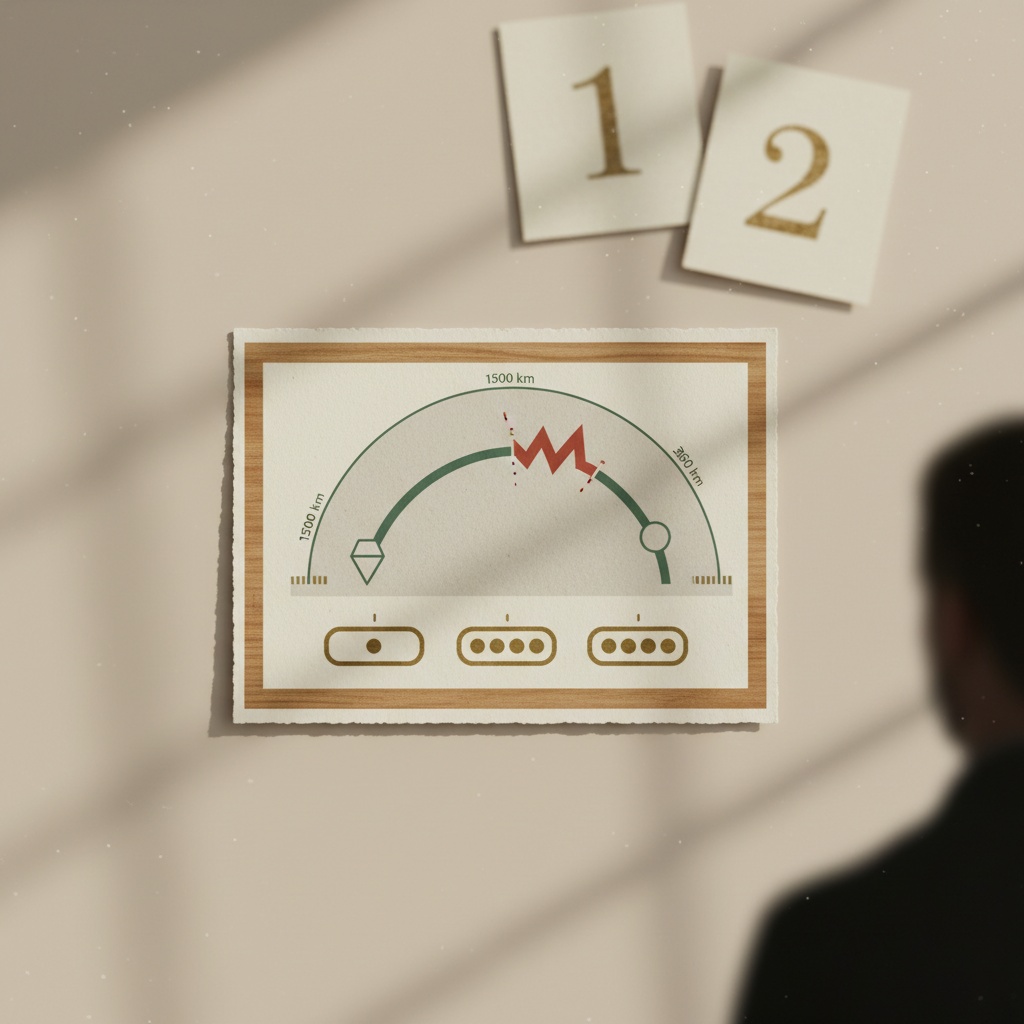
EU 261 does not pay fixed compensation when a disruption is caused by extraordinary circumstances outside the carrier’s control. The entire strike question is about where that line falls — and it falls between the airline’s own people and everyone else.
| Who is striking | Extraordinary circumstance? | Fixed compensation 250–600 EUR | Duty of care |
|---|---|---|---|
| The airline’s own pilots | Normally no | Yes, normally owed | Yes |
| The airline’s own cabin crew | Normally no | Yes, normally owed | Yes |
| Air traffic control (ATC) — ROMATSA, ENAV, DSNA, SkyGuide | Normally yes | No | Yes |
| Airport personnel (ground handlers, security, baggage) of an outside provider | Normally yes | No | Yes |
| The airline’s own ground handlers | Disputed, often no | Often yes | Yes |
| Fuel supplier or other third-party services | Normally yes | No | Yes |
The logic behind the table is simpler than it looks. When the airline’s own staff strike, the dispute is about its own employment terms, its own negotiations, its own commercial decisions. That is part of running an airline — a business risk, not a bolt from the blue. When air traffic control or an outside airport service goes on strike, the carrier is hit by something a third party caused, much like severe weather or an airspace closure.
The amounts depend on the flight distance. 250 euro for flights up to 1,500 km — Bucharest to Munich, Vienna, Athens. 400 euro for flights between 1,500 and 3,500 km — Bucharest to London, Paris, Madrid. 600 euro for flights outside the EU over 3,500 km — Henri Coandă to New York, Dubai or Tokyo. A full walkthrough sits in our EU 261 2026 delay thresholds guide.
When the airline’s own crew strikes: usually compensation
If the cabin crew or pilots of the airline you were due to fly with go on strike, the starting point is that you are entitled to strike flight compensation — provided the flight was cancelled or delayed at arrival by more than three hours, and the airline notified you less than 14 days before scheduled departure.
The clearest legal source here is the Court of Justice of the EU ruling in Krüsemann and Others (C-195/17, 2018). The case concerned a so-called wildcat strike — staff at TUIfly called in sick collectively in protest after a restructuring announcement, without the union formally calling a strike. The airline argued this was an extraordinary circumstance. The Court said no: a spontaneous staff conflict rooted in the carrier’s own decisions belongs to normal operations and lies within the carrier’s control. Result: no extraordinary circumstance — fixed compensation owed.
What this means for a Romanian passenger: if the airline replies with a rejection that calls a strike by its own crew an extraordinary circumstance, that rejection rests on weak ground. It is worth pushing back, in writing, with reference to Krüsemann. The question of announced, union-called strikes is more legally contested than wildcat strikes, but even there the main rule weighs heavily in the passenger’s favour: a carrier’s own labour conflict is its own responsibility.
The 14-day rule operates exactly as in any other cancellation. Notice at least 14 days before departure removes the fixed compensation — you keep refund and re-routing, but the 250 to 600 euro is gone. Notice inside 14 days triggers compensation, subject to a narrow exception when re-routing kept you close to schedule. Sturgeon (joined cases C-402/07 and C-432/07, 2009) anchors the underlying principle that delayed flights of more than three hours at arrival are treated equivalently to cancellations for compensation purposes — a line the Court has built on consistently since.
When ATC or the airport strikes: usually no compensation

If instead air traffic control — ROMATSA in Romania, ENAV in Italy, DSNA in France, SkyGuide in Switzerland, NATS in the UK — or airport personnel of an outside provider go on strike, the picture changes. The carrier is hit by something it does not control. Such a strike normally counts as an extraordinary circumstance under article 5(3) of EU 261, and the fixed compensation falls away.
This is the situation behind much of the frustration in passenger forums. A typical airline reply reads: “ATC delays and air traffic queues are considered force majeure and lie outside the carrier’s control. Only the duty of care applies, no compensation.” For a genuine ATC strike, that reply is essentially correct.
But — and this matters — the airline does not escape entirely. It must still show that it did what it reasonably could to avoid your specific departure being cancelled. An ATC strike in one country need not knock out a flight that could have taken a different route. A cancellation several days after the strike ends raises a fair question about whether the strike was really the cause. And an airline that cancels a flight a week early “for operational reasons” while invoking a strike that has not yet started has a harder argument to win at a Judecătoria.
The same logic applies to Wallentin-Hermann (C-549/07, 2008): the Court held there that a technical defect inherent in the normal operation of an airline is not extraordinary. By analogy, a labour dispute that is part of operating an airline cannot be dressed up as an external event simply because the strike call came from outside.
“An event outside our control” — the airline’s standard language
It pays to recognise the wording. When a Romanian passenger is rejected for strike flight compensation, the same phrases keep appearing: extraordinary circumstances, force majeure, and — word for word from rejection letters we see — “the compensation you are claiming does not apply because the delay was caused by an event outside our control”.
The concepts themselves are legitimate. The problem is the way they are used — as a catch-all, pasted on without distinguishing between strike types. A rejection that simply states “strike = outside our control” without naming whose strike it was, what the carrier did to mitigate, and why your specific flight could not be saved has not made the assessment EU 261 requires. That is your moment to push back and ask the airline to be specific: which strike, who was striking, what alternative routings were considered, and why your flight was the one cut.
The CJEU has been explicit about the burden of proof: it lies on the carrier, not on the passenger. Wallentin-Hermann (C-549/07, 2008) sets the standard that “extraordinary” is interpreted strictly and the airline must produce evidence, not assertions. A Romanian Judecătoria, faced with a vague rejection and a passenger holding a precise written request for the operational facts, will not be sympathetic to the carrier.
The duty of care always applies — even when no compensation is paid
This is the right most passengers miss and airlines rarely correct. Even when you are not entitled to the 250 to 600 euro, you are entitled to be looked after while you wait. The duty of care under article 9 of EU 261 is automatic, regardless of cause.
In every strike scenario — ATC, airport, airline crew, wildcat or announced — the carrier must provide:
- Meals and drinks in reasonable quantity, in proportion to the wait
- A hotel when an overnight stay becomes necessary, plus transport to and from the hotel
- Two phone calls, emails or messages so you can reach family or work
The duty of care is often the only right that actually remains in an ATC strike — and it is money worth claiming back. If the airline does not arrange meals and accommodation on the spot — which happens routinely in the chaos of a major strike at Henri Coandă, Cluj or Timișoara — buy reasonable meals and book a reasonable hotel yourself, keep every receipt, and claim the reimbursement in writing afterwards.
What “reasonable” means: the standard is what a person in your situation would normally spend, not a five-star indulgence. A 30-euro restaurant meal during a long delay is reasonable. A 600-euro bottle of wine is not. Read more on the rule in our right to care: meals and hotel guide.
How a Romanian passenger files the claim — ANPC and the Judecătoria
Four steps, ending in a deadline. A written request to the airline naming the type of strike and demanding article 7 compensation; escalation to ANPC, free and accepted in English; the Judecătoria, where claims up to 10,000 lei run the simplified procedure; and three years to act:
Step one — the written request to the airline. Send the claim by email or web form, in Romanian or English, with the booking reference, flight number, date, route, distance and an explicit demand for the fixed compensation under article 7 of EU 261. State the type of strike (airline crew vs ATC vs airport), reference Krüsemann (C-195/17, 2018) if it was the carrier’s own staff, and set a 30-day deadline for reply. Keep the email and the read receipt.
Step two — escalation to ANPC. The Autoritatea Națională pentru Protecția Consumatorilor (ANPC) is the Romanian consumer protection authority. It is also Romania’s national enforcement body for Regulation 261/2004, designated by Government Decision (HG) no. 1912/2006. It accepts written complaints, including in English when the carrier is foreign, and contacts the airline on the passenger’s behalf. The ANPC route is free and effective for run-of-the-mill rejections, especially with airlines that have a Romanian subsidiary or office.
Step three — the Judecătoria. When administrative escalation fails, the local Judecătoria (district court) handles small claims under EU 261. The court applies Romanian Civil Procedure but enforces EU 261 directly. Claims up to 10,000 lei follow the simplified procedure. The court can summon the airline, hear the strike-type argument and order payment in euro or lei equivalent, plus interest.
The legal text the court applies is the regulation itself — and you can read the consolidated version on EUR-Lex Regulation (EC) No 261/2004. Print the relevant articles and bring them to the hearing.
Step four — prescription. Romanian passengers have three years to act, from the date of the cancelled or delayed flight, under article 2517 of the Romanian Civil Code. The CJEU confirmed in Cuadrench Moré (C-139/11, 2013) that national prescription periods govern EU 261 claims — meaning the Romanian three-year rule, not the much shorter periods some carriers cite from their own jurisdictions, applies. After three years the Judecătoria will reject the case as time-barred, regardless of how clear the airline’s liability is. Do not let a strike claim sit while the airline runs out the clock with internal reviews.
For the Romanian-language version of this page, see Greva controlorilor de trafic aerian și compensarea EU 261 and Greva personalului aeroportuar și compensare EU 261.
Doing it yourself or using a claims service
Once the strike type is established and the rejection arrives, the practical question is whether to push the case forward yourself or delegate. The choice is not ideological — it is about time, paperwork and tolerance for an airline that will not reply.
Doing it yourself is free and works well when the strike was clearly the airline’s own crew, the flight was cancelled with less than 14 days’ notice, and you are willing to write the second and third email, escalate to ANPC, and possibly file at the Judecătoria. The trade-off is calendar time: airlines often take three or four rounds of correspondence before settling, and a court filing is another 30 to 90 days.
A claims service takes the same case for a percentage of the payout — usually 25 to 35 percent including VAT — and runs the whole process, including the Judecătoria stage if needed. The Romanian passenger receives nothing if the case loses, and the service absorbs the legal costs. For an ATC strike where the carrier’s extraordinary-circumstance defence is strong, a service may decline the case altogether — that itself is useful information.
A full side-by-side breakdown sits in our claim yourself or use a service guide.
Free strike-claim check — payout in your hand or nothing owed
This is not legal advice
This page is built from Regulation (EC) No 261/2004, published CJEU rulings on the EUR-Lex allow-list, ANPC public guidance, and the Romanian Civil Code. It is informational, not legal advice on an individual claim. Strike cases are assessed case by case, and some points — particularly announced, union-called strikes by the airline’s own staff — remain legally contested in 2026.
For an individual dispute, contact ANPC (the national consumer protection authority and EU 261 enforcement body in Romania). It accepts complaints in English when the airline is foreign. For complex or high-value strike claims — particularly long-haul cancellations at 600 euro per passenger or family bookings of four or more — a Romanian aviation lawyer or a specialised claims service may be worth the percentage fee.
We update this page when the Court of Justice of the EU, EUR-Lex or ANPC brings something new on strike classification.
Sources and further reading
- EUR-Lex — Regulation (EC) No 261/2004 — the underlying EU regulation on air passenger rights
- Court of Justice of the EU — Krüsemann and Others, C-195/17 (2018) — a wildcat strike by the carrier’s own crew is not an extraordinary circumstance
- Court of Justice of the EU — Wallentin-Hermann, C-549/07 (2008) — extraordinary circumstances interpreted strictly; burden of proof on the carrier
- Court of Justice of the EU — Sturgeon (joined C-402/07 and C-432/07, 2009) — three-hour arrival delays trigger the same compensation as cancellations
- Court of Justice of the EU — Cuadrench Moré, C-139/11 (2013) — national prescription periods govern EU 261 claims; Romania applies its three-year rule
- ANPC — Autoritatea Națională pentru Protecția Consumatorilor — the Romanian consumer protection authority
- Article 2517 of the Romanian Civil Code — the three-year general prescription period


No comments yet