
Yes, you can sue an airline in Romania for EU 261 compensation. The prescription period is three years under article 2517 of the Romanian Civil Code, a deadline the Court of Justice of the European Union confirmed applies to EU 261 claims in Cuadrench Moré (C-139/11, 2013). Claims up to 10,000 lei are routed through the simplified small-claims procedure — cererea de valoare redusă under articles 1026-1033 of the Code of Civil Procedure — with a flat stamp duty of 50 lei and a sharply limited cost risk if the judge rules against you. CompensaRezbor keeps this guide aligned with the primary sources and current case law.
This page is written for the passenger who has already tried. You sent a written claim to the airline and were refused, or you filed a complaint with ANPC, won the assessment, and the airline still has not paid. What is left is court, and it is less dramatic than it sounds. The small-claims procedure was designed for private individuals running cases without a lawyer. You fill in a standard form, pay 50 lei, and the Judecătoria handles the rest on the documents.
Set your expectations realistically. A Romanian court case takes weeks to months, not days. And if your claim is above 10,000 lei — several passengers on the same booking, or a long-haul route for a family — you move into the ordinary civil track and expose yourself to a real cost risk that justifies considering a no-win-no-fee compensation service instead.
The whole page is written for Romanian jurisdiction and Romanian rules. The CJEU case law cited is binding across the European Union; stamp duty, cost rules and procedural details are specifically Romanian and based on Government Emergency Ordinance 80/2013 (taxa de timbru) and Law 134/2010 (the Code of Civil Procedure).
The route in: what you need to have done first
Court is not the first step, and skipping straight to a lawsuit gives no procedural advantage while costing money for nothing. The honest order starts with the written claim to the airline, and the sequence that follows is set out below:
Court is not the first step. Skipping straight to a lawsuit gives you no procedural advantage and costs money for nothing. The honest order is:
- Written claim to the airline citing article 7 of Regulation (EC) 261/2004. A template and the concrete steps are on our guide to claim flight compensation yourself.
- Complaint to ANPC (Autoritatea Națională pentru Protecția Consumatorilor), Romania’s national consumer protection authority and national enforcement body for Regulation 261/2004, designated by Government Decision (HG) no. 1912/2006.
- The Judecătoria — the first-instance court in your judicial district, and the venue where most EU 261 cases land.
An ANPC complaint is not legally required before suing, but there are two solid reasons to file one. First, a written response from a state authority that confirms your claim has weight in front of a judge. Second, the procedure is free and resolves a meaningful share of cases without court.
If the airline has already stonewalled ANPC and you hold a written assessment in your favour, you are particularly well positioned for a lawsuit. The merits have already been examined and the reasoning can be quoted in your court file.
Which court track: cererea de valoare redusă or ordinary civil case?
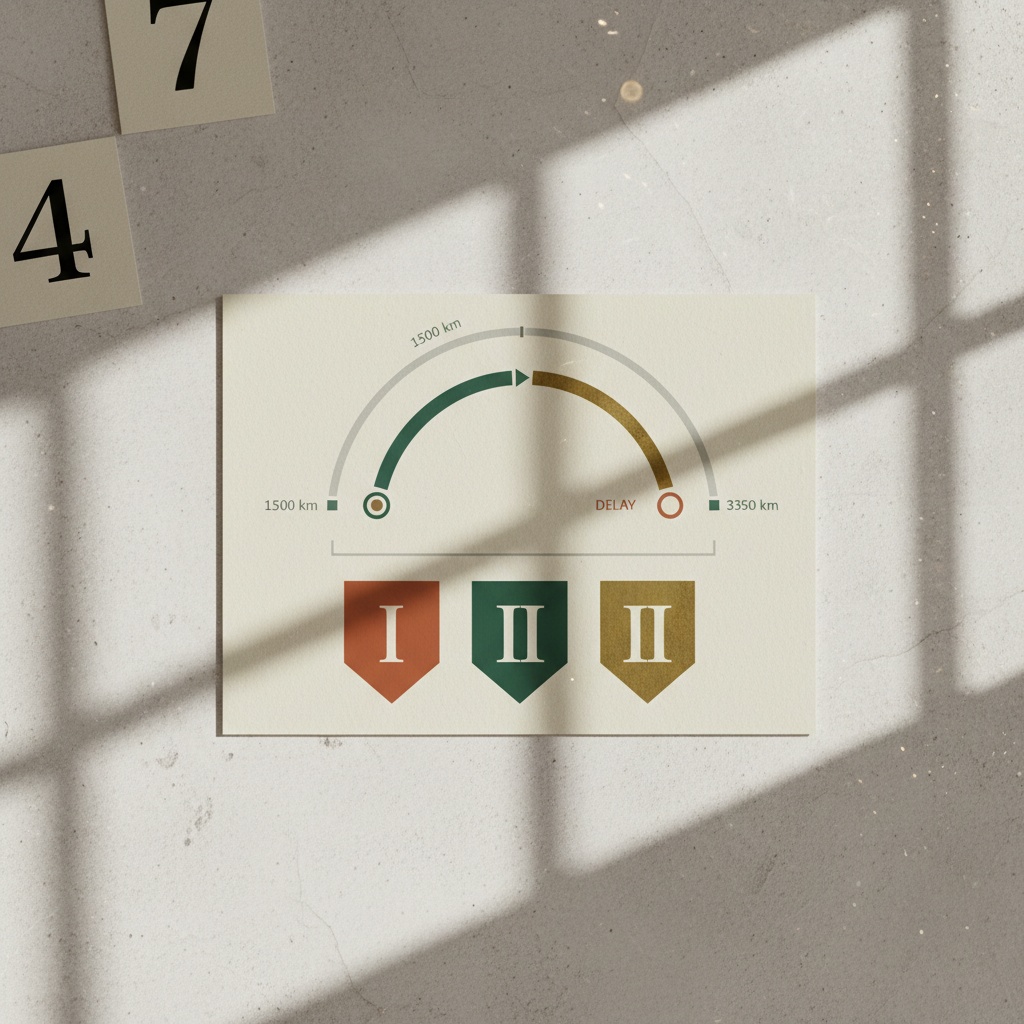
The Code of Civil Procedure distinguishes between two civil tracks, and the choice is automatic based on the value of the claim. EU 261 claims nearly always fall into the simplified track.
Cererea de valoare redusă (small-claims procedure). Articles 1026-1033 of the Code of Civil Procedure govern this track for monetary claims up to 10,000 lei. The procedure is mostly written, no hearing is required unless the judge specifically orders one, and the standard formularul de cerere is available on the Judecătoria’s website and at the court registry. Stamp duty is a flat 50 lei under article 6 of OUG 80/2013.
Ordinary civil case (procedura de drept comun). For monetary claims above 10,000 lei — which can arise when several passengers on the same booking pool their claims, or a family of four on a long-haul route claims 600 euro each (around 12,000 lei combined) — the full Code of Civil Procedure applies, the stamp duty scales with claim value (article 3 OUG 80/2013), and the cost risk on losing is real.
| Cererea de valoare redusă | Ordinary civil case | |
|---|---|---|
| Value threshold | Up to 10,000 lei | Above 10,000 lei |
| Stamp duty (taxa de timbru) | 50 lei flat | Scales with claim value (~200-400 lei for typical EU 261) |
| Representation needed | None — run by the party | In practice necessary |
| Cost risk on losing | Stamp duty plus capped legal costs | Loser pays the winner's full legal costs (article 453 CPC) |
| Decision basis | Documents, normally no hearing | Hearings, witness evidence, full procedure |
| Typical handling time | 30-90 days | 6-18 months |
For the standard EU 261 case — one or two passengers, 250 to 600 euro per passenger — you land safely in the cererea de valoare redusă track. The threshold is measured at the moment of filing on the basis of the principal claim, excluding interest and legal costs.
Stamp duty, cost risk and timeline
This is the part where the fear of court arrives: what if you lose and have to pay the airline’s expensive law firm? The question is reasonable. The answer depends entirely on which track applies.
In a cererea de valoare redusă the cost exposure is built to be modest. The Judecătoria charges 50 lei in stamp duty under OUG 80/2013. If the judge rules against you, the airline can recover its proven legal costs, but the simplified procedure keeps those costs proportionate — typically a few hundred lei, not thousands. Your real downside on a losing 250 euro EU 261 case is in the low hundreds of lei.
In an ordinary civil case article 453 of the Code of Civil Procedure applies in full: the loser reimburses the winner’s legal costs as proven by invoices. An airline that retains a law firm in a combined family case can produce a costs bill that easily reaches 3,000-8,000 lei, sometimes higher. That is why large combined EU 261 claims are rarely pursued alone at the Judecătoria — the risk premium is too high for the upside.
Plan for the time as well. A cererea de valoare redusă decided on the documents lands in 30 to 90 days, sometimes faster if the airline does not contest, sometimes longer if the judge orders an oral hearing. An ordinary civil case regularly runs six to eighteen months. The first-instance judgment can be appealed to the Tribunal in your county, which adds months to the timeline.
A reassuring figure: The prescription period for an EU 261 claim in Romania is three years under article 2517 of the Civil Code, a position the CJEU expressly endorsed for EU 261 in Cuadrench Moré (C-139/11). You have time to take the decision calmly — you do not need to rush to court the week after the ANPC response. But three years is a safety margin, not a comfort cushion: file before the case ages and the airline’s documentation becomes harder to obtain.
What you write in the cerere

The cererea de valoare redusă is filed on the standard formularul de cerere set out in Annex 1 to the Code of Civil Procedure and available on every Judecătoria’s website. Under article 1029 CPC the form must include the parties, the prayer for relief, the legal basis, the facts and the evidence. For an EU 261 case the structure is the same every time.
A compact skeleton you can adapt:
Reclamant (Claimant): [Your full name, CNP, address, phone, email]
Pârât (Defendant): [Airline’s registered name, registration number, country of registration, registered office address, registered Romanian address for service if any]
Obiectul cererii (Subject of the claim): Obligarea pârâtei la plata sumei de [euro amount or its lei equivalent at the BNR rate on the filing date], reprezentând compensația prevăzută de articolul 7 din Regulamentul (CE) nr. 261/2004, plus dobânda legală conform OG 13/2011 de la data scadenței până la plata efectivă, plus taxa de timbru de 50 lei.
Temei de drept (Legal basis): Article 7(1) of Regulation (EC) 261/2004 establishing common rules on compensation and assistance to passengers in the event of denied boarding, cancellation or long delay.
Situația de fapt (Facts): The claimant was booked on flight [number] operated by the defendant on [date] from [departure airport, IATA code] to [destination airport, IATA code], booking reference [PNR]. The flight was [delayed / cancelled / overbooked] and the claimant reached the final destination [hours] and [minutes] after the scheduled arrival. The distance is [under 1,500 / 1,500-3,500 / over 3,500] km, which under article 7(1)(a/b/c) entitles the passenger to compensation of [250 / 400 / 600] euro. The claimant sent a written claim to the defendant on [date]. The defendant [refused on (date) / failed to reply within a reasonable time]. The case was reviewed by ANPC under reference [number], which [recommended payment / found in favour of the claimant].
Probe (Evidence): Documentary: booking confirmation (anexa 1), boarding pass (anexa 2), written correspondence with the defendant (anexa 3), [where applicable, ANPC response, anexa 4].
CJEU case law: The right to compensation on long delay follows from the judgment of the Court of Justice in joined cases Sturgeon and Böck & Lepuschitz (C-402/07 and C-432/07, 2009). The treatment of connecting flights as one journey for delay measurement follows from Folkerts (C-11/11, 2013) and Wegener (C-537/17, 2018).
The cerere is filed at the Judecătoria for the place where the defendant has its seat, or, for foreign air carriers, at the Judecătoria covering the Romanian departure or arrival airport. This choice of forum is grounded in article 7(1)(b) of the Brussels Recast Regulation (1215/2012) and the CJEU judgment in Rehder (C-204/08, 2009), which gave the passenger the option to sue at either the place of departure or the place of arrival. Practically: a flight from Bucharest Otopeni goes to Judecătoria Buftea; a flight from Cluj-Napoca goes to Judecătoria Cluj-Napoca; a flight from Timișoara goes to Judecătoria Timișoara.
Evidence and what the Romanian judge actually looks at
EU 261 cases are evidentially light. The claimant typically needs to establish four facts: (1) that you were booked on the flight, (2) that the flight was delayed, cancelled or overbooked, (3) the length of the arrival delay, and (4) the flight distance for the article 7 tariff.
What the airline must prove, if it wants to avoid liability, is the existence of extraordinary circumstances under article 5(3) of the regulation and that all reasonable measures were taken to avoid the disruption. The burden of proof is on the carrier — you do not have to disprove an extraordinary circumstance defence; the airline has to make it out.
Three points of EU law are worth pinning down in your file because Romanian judges follow CJEU case law directly:
Long delay equals cancellation for compensation purposes. The CJEU held in joined cases Sturgeon and Böck & Lepuschitz (C-402/07 and C-432/07, 2009) that an arrival delay of three hours or more triggers compensation under article 7 in the same way as a cancellation. This has been settled law for over fifteen years but airlines still try to argue it; Sturgeon is the answer.
A connecting flight is one journey. Folkerts (C-11/11, 2013) held that the arrival delay is measured at the final destination even if the first leg departed on time and the delay arose during the connection. Wegener (C-537/17, 2018) confirmed and extended the reasoning. If the airline tries to segment your trip — arguing the first leg was on time and that it is not responsible for the second — these two cases close the argument.
Technical defects are almost never extraordinary. The CJEU held in Wallentin-Hermann (C-549/07, 2008) and van der Lans (C-257/14, 2015) that technical problems that arise during normal flight operations are not extraordinary circumstances within the meaning of article 5(3). The full EUR-Lex text of the regulation is at Regulation (EC) 261/2004 on eur-lex.europa.eu. An airline relying on a vague “technical fault” defence has to show the defect lay outside ordinary operations — a high bar that, in our experience reading Romanian first-instance judgments, carriers rarely clear.
A cererea de valoare redusă is normally decided on the documents. If the judge orders an oral hearing, it is short and informal. You explain what happened, the airline’s representative responds, the judge asks targeted questions. No witness examination is needed in the typical case — the booking confirmation, boarding pass and correspondence carry the burden.
When it makes sense to hand the case to a service instead
Here is the honest trade-off: everything above can be done alone, and the question is only when that is worth it. Running it yourself in court makes sense in a clean documented case; the section lists the opposite scenarios just as plainly:
Here is the honest trade-off. Everything above you can do yourself. The question is when it is worth doing, and when it is not.
Run it yourself at the Judecătoria if:
- The case is clean and documented — the airline already accepts the flight was delayed and only contests the amount or relies on a weak extraordinary circumstances defence.
- You hold an ANPC response in your favour that the airline refuses to comply with. The case is then nearly decided in advance.
- The claim is below 10,000 lei (cererea de valoare redusă) — cost risk is low and you need no representation.
- You have the time and patience to file the form and follow the written exchange.
Hand it to a no-win-no-fee service if:
- The claim is close to or above 10,000 lei (ordinary civil track) — cost risk on losing is real.
- The airline is fighting hard with a law firm and the dispute turns on detailed CJEU case law on extraordinary circumstances.
- You have already spent months on the airline and ANPC and have no energy left to run the court step on top.
- The defendant is a foreign carrier and cross-border service, translations and procedure get complicated.
A reasonable no-win-no-fee operator that handles Romanian EU 261 cases takes a commission of around 35 percent on a successful claim, with a legal surcharge of around 15 percent if the file actually goes to court. On a 600 euro claim you keep roughly 300 euro after fees on a court file — but you spend zero hours and carry zero cost risk.
If you want the time-and-stress saved instead of the maximum payout, you can submit your flight to AirHelp for a free assessment — they handle the airline, the regulator and the court file if it gets that far. For more on duty-of-care expenses you can also recover, see our guide on the right to care: meals, hotel and re-routing, and for cancellations specifically the page on cancelled flight compensation. The Romanian-language version of this article is at compensare zbor în instanță.
Prescription period and how long you really have
The Romanian prescription period for an EU 261 claim is three years, set by article 2517 of the Civil Code (the general prescription for personal monetary claims). This applies because Regulation 261/2004 itself sets no deadline — the regulation is silent on the point — and the question is therefore left to national law per the CJEU’s judgment in Cuadrench Moré (C-139/11, 2013).
This applies when you sue in Romania. If the case were litigated in another EU jurisdiction, other deadlines apply, and several are noticeably shorter or longer:
| Country | Prescription period for EU 261 | Legal basis |
|---|---|---|
| Romania | 3 years | Civil Code, article 2517 |
| Germany | 3 years | BGB § 195 |
| France | 5 years | Code civil article 2224 |
| Spain | 5 years | Código Civil article 1964 |
| United Kingdom (England/Wales) | 6 years | Limitation Act 1980 |
| Sweden | 10 years | Preskriptionslagen 1981:130 |
| Netherlands | 2 years | Burgerlijk Wetboek 8:1835 (air transport) |
Practical point: as long as you sue in Romania you have three years, but you should not wait. The evidence position degrades over time — the airline’s internal documentation of a specific flight from two years ago is not the same as the documentation for last month. And if the carrier goes bankrupt before the judgment, your claim turns into an unsecured debt in the bankruptcy estate. Run the case while it is fresh.
Three years is a safety margin, not a comfort cushion. Use it so you do not stress, not so you can drift.
This is not legal advice
This page is based on published primary sources: the EUR-Lex text of Regulation 261/2004, the CJEU’s published judgments, the Romanian Civil Code, the Code of Civil Procedure (Law 134/2010), and Government Emergency Ordinance 80/2013 on taxa de timbru. Expert review by a practising Romanian lawyer (avocat) has not been carried out. For tailored advice on your file, contact ANPC, a local consumer-protection NGO, or an avocat în drept civil with experience in air-passenger litigation.
Frequently asked questions
The questions open with the cost that decides most cases: under the cererea de valoare redusă procedure for claims up to 10,000 lei, the taxa de timbru is a flat 50 lei under article 6 of OUG 80/2013. Ordinary claims follow a different scale.
What does it cost to sue an airline for flight compensation in Romania?
Under the cererea de valoare redusă procedure for claims up to 10,000 lei, the taxa de timbru is a flat 50 lei (OUG 80/2013, article 6). For ordinary civil claims the stamp duty scales with claim value — typically 200-400 lei for a single EU 261 file. The recoverable costs against the loser are capped in the small-claims track, so the real downside if the judge rules against you is roughly your 50 lei plus a few hundred lei of the airline’s costs.
Can I lose money if the Judecătoria rules against me?
In a cererea de valoare redusă the risk is small: typically your 50 lei stamp duty plus a modest amount for the airline’s proven costs. In an ordinary civil case the risk is real — article 453 of the Code of Civil Procedure says the loser reimburses the winner’s full legal costs, and an airline that retains a law firm can run those costs into the thousands of lei. That asymmetry is why combined family claims above 10,000 lei are usually handed to a no-win-no-fee service rather than pursued alone.
How long does a Romanian court case for flight compensation take?
A cererea de valoare redusă normally takes 30 to 90 days because it is decided on the documents without a hearing unless the judge orders one. Ordinary civil cases take six to eighteen months. You have plenty of time: the prescription period for an EU 261 claim in Romania is three years under article 2517 of the Civil Code, confirmed for EU 261 by the CJEU in Cuadrench Moré (C-139/11).
Do I need a lawyer to sue an airline at the Judecătoria?
No. The cererea de valoare redusă procedure is designed for private individuals without representation. You complete the standard form (formularul de cerere), file it at the competent Judecătoria, pay 50 lei in stamp duty, and the court guides the written exchange. For ordinary civil cases above 10,000 lei representation is in practice necessary, which is one of the reasons larger combined claims are often handed to a service.
What happens if the airline goes bankrupt before the judgment?
Your claim becomes an unsecured debt in the bankruptcy estate and is, in practice, usually worth little or nothing. This is not theoretical: several European carriers have collapsed in the past three years with EU 261 claims unpaid. Pursue the claim while the airline is solvent — the three-year prescription window is a safety buffer, not a reason to wait.
Does a connecting flight count as one journey or two in Romanian court?
As a single journey. The CJEU settled this in Folkerts (C-11/11) and confirmed it in Wegener (C-537/17): a booking with a connection is treated as one continuous transport, and the arrival delay is measured at the final destination. Romanian judges follow CJEU case law directly, so the segmentation argument an airline sometimes tries does not win on the merits.
What about the prescription period if I fly with a foreign airline?
The prescription period is governed by the forum country, not by where the airline is based. If you sue in Romania (because the departure or arrival point is in Romania, per the Brussels Recast Regulation and Rehder C-204/08), Romanian prescription law applies — three years. If you sued in the UK it would be six years; in the Netherlands only two years for air transport. It is one of the few times where your Romanian forum is a deliberate strategic choice.
Sources and further reading
- EUR-Lex — Regulation (EC) 261/2004, in particular article 5 (cancellations), article 7 (right to compensation) and article 9 (right to care)
- CJEU — Cuadrench Moré (C-139/11, 2013) — national prescription periods apply to EU 261
- CJEU — Sturgeon and Böck & Lepuschitz (joined cases C-402/07 and C-432/07, 2009) — long delay treated as cancellation for compensation
- CJEU — Folkerts (C-11/11, 2013) — connecting flights as one journey
- CJEU — Wegener (C-537/17, 2018) — connecting flights, confirmation
- CJEU — Wallentin-Hermann (C-549/07, 2008) and van der Lans (C-257/14, 2015) — technical faults rarely extraordinary
- CJEU — Rehder (C-204/08, 2009) — choice of forum for passengers
- Romanian Civil Code, article 2517 — three-year general prescription
- Romanian Code of Civil Procedure (Law 134/2010), articles 1026-1033 — cererea de valoare redusă; article 453 — loser pays costs in ordinary procedure
- OUG 80/2013 on taxa de timbru — article 6 (flat 50 lei for small claims)
- ANPC — Autoritatea Națională pentru Protecția Consumatorilor
Last reviewed: June 2026. Stamp duty values and procedural thresholds reflect Romanian law in force in 2026.


No comments yet