
A flight compensation calculator works out the fixed EU 261/2004 payout for a Romanian passenger by combining two inputs: the great-circle distance between the departure and arrival airport, and how late the aircraft door opened at the final destination. The result is one of three amounts — 250, 400 or 600 euro — and the figure has nothing to do with what the ticket cost. The calculator on this page shows the estimate; the rest of the article explains how that estimate is built, so the result is not a black box but a number you can defend in front of an airline, ANPC or a Judecătoria. CompensaRezbor breaks down how these rules apply in practice.
Interactive calculator: departure airport, arrival airport, arrival delay and cause in — estimated compensation amount in euro out.
What the calculator asks for, and why each input matters
The calculator asks four questions, and each one matches a clause in Regulation 261/2004. Skipping any of them produces a number you cannot rely on — which is why the section explains what each question is actually testing before you enter anything:
The calculator asks four questions, and each one matches a clause in Regulation (EC) No 261/2004. Skipping any of them produces a number you cannot trust.
Departure and arrival airport. From these the engine computes the flight distance in kilometres, measured as the crow flies between the two airports — the great-circle distance, not the route the aircraft actually flew. For a Romanian passenger flying Henri Coandă in Bucharest to Madrid Barajas, that is roughly 2,420 km. The distance is what places the flight in the right tier and decides whether the payout is 250, 400 or 600 euro.
Delay length at the final destination. What counts is the arrival delay — the moment the aircraft door opened in Madrid, not the moment the plane should have pushed back from Bucharest. The threshold is three hours. A two-hour-fifty-nine-minute arrival delay generates no fixed compensation, however miserable the wait at the airport was.
Type of disruption. A delay, a cancellation and a denied boarding are assessed slightly differently. A cancellation announced inside the 14-day notice window is treated almost identically to a long delay, but a cancellation announced more than 14 days ahead removes the fixed payout entirely (the refund-or-re-routing right survives separately).
The cause the airline cites. This is the question most passengers underestimate. If the carrier proves an extraordinary circumstance under article 5(3) — extreme weather, an air traffic control strike, a security threat, a confirmed bird strike — the fixed compensation disappears even when the delay was severe. If the cause was within the airline’s control, like a technical fault on a TAROM or Wizz Air aircraft, or a staff shortage on a regional rotation, the payout stays.
How the amount is worked out: the three distance tiers
Article 7 splits flights into three tiers by distance, and the calculator applies exactly the same split, because that is what Romanian courts and ANPC apply too. The tiers and the thresholds between them are set out below:
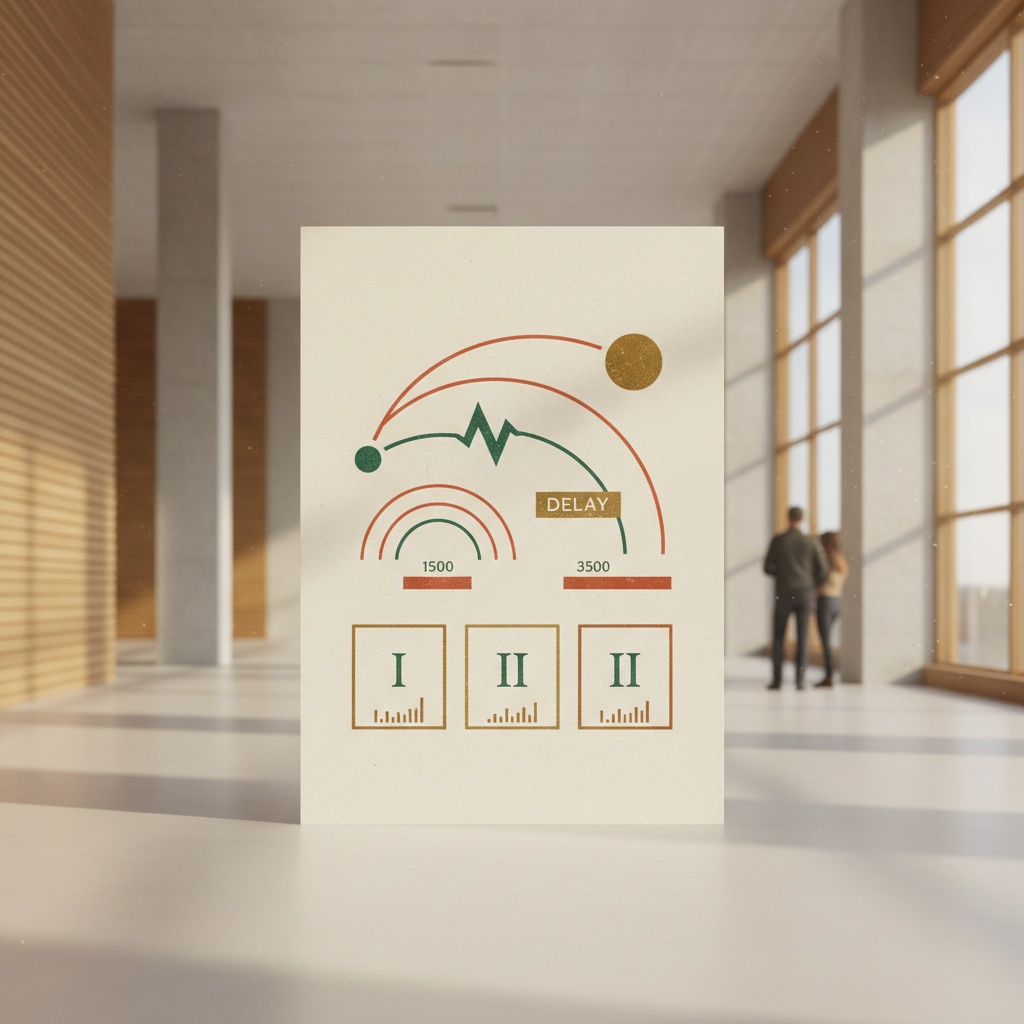
Article 7 of EU 261/2004 splits flights into three tiers by distance. The calculator applies exactly the same split, because Romanian courts and ANPC apply exactly the same split.
| Flight distance | Compensation | Typical example from Romania |
|---|---|---|
| Up to 1,500 km | 250 euro | Bucharest–Vienna, Cluj–Munich, Iași–Berlin, Cluj–Athens |
| 1,500 to 3,500 km (and any intra-EU flight over 1,500 km) | 400 euro | Bucharest–Madrid, Timișoara–Lisbon, Bucharest–Dubai, Cluj–Tel Aviv |
| Over 3,500 km between the EU and a non-EU country | 600 euro | Bucharest–New York |
The euro figure is the legally binding one — that is the sum the operating carrier must pay, in euro or its lei equivalent at the Banca Națională a României reference rate on the date of payment. Currency fluctuations do not change the entitlement.
One detail on the longest tier is easy to miss. On a flight over 3,500 km between the EU and a non-EU country, the airline may halve the payout to 300 euro when it re-routes the passenger and the arrival delay stays under four hours. The calculator handles that automatically when you enter the actual arrival delay — so a Bucharest–New York flight that arrives three hours and twenty minutes late on a re-routed itinerary returns 300 euro, not 600.
Compensation is not a refund — and a Romanian passenger may be entitled to both
Before trusting any figure, separate the two rights that EU 261 creates. The calculator works out compensation — the fixed flat payout for the disruption itself. It does not work out a refund, which is the ticket money for a journey you no longer intend to make.
These are two independent entitlements. If a TAROM flight from Bucharest to London is cancelled, the passenger picks between a full refund of the ticket and re-routing to London, and on top of that may be owed 400 euro because the cancellation came inside the 14-day window. Carriers regularly offer a refund and frame the offer as a “settlement” of the whole case. That framing has no legal weight. A Judecătoria in Bucharest, Cluj or Timișoara will treat the refund and the compensation as separate causes of action — accepting the first does not waive the second. We unpack that distinction in our guide to cancelled flight compensation in Romania.
When the calculator returns zero — and when zero can still be wrong

If the estimate comes out at zero, it is almost always for one of three reasons: the arrival delay was under three hours; the airline has cited an extraordinary circumstance the calculator cannot verify; or the flight falls entirely outside the geographic scope of EU 261 (for example, a Doha–Bangkok flight on a Qatari carrier with no EU touchpoint).
Here is the honest caveat. An airline calling a cause “extraordinary” does not make it extraordinary. The Court of Justice has built a long line of case law narrowing what really counts. In Wallentin-Hermann (C-549/07, 2008) the court ruled that technical defects which arise in the course of normal aircraft operation are not extraordinary circumstances — they are an inherent part of running an airline. In Krüsemann (C-195/17, 2018) a wildcat strike by the carrier’s own crew was held not to be extraordinary, even though the airline argued it had no warning. In Sturgeon (joined cases C-402/07 and C-432/07, 2009) the court confirmed that passengers whose flights arrive three hours or more late are entitled to the same fixed compensation as cancellation victims.
If the calculator zeros the payout because the airline cited a “technical issue” or a strike by its own staff, the matter is not settled. Send a written claim anyway, escalate to ANPC and, if needed, to the Judecătoria. The burden of proof under article 5(3) sits with the airline, not the passenger.
A second point: even when the fixed compensation falls away, the duty of care under article 9 does not. The airline must still cover meals, drinks and, where the wait runs overnight, a hotel — regardless of cause. We cover the full scope of that obligation in right to care: meals and hotel during long delays.
Connecting flights, missed connections and the Folkerts rule
The calculator handles connecting itineraries on a single booking the same way the CJEU does. The arrival delay is measured at the final destination, not at the airport where the connection was missed. The leading authority is Folkerts (C-11/11, 2013), which held that a passenger who arrives at the final destination three hours or more late is entitled to compensation under article 7, even when the original flight departed on time and only a missed connection caused the delay.
For a Romanian passenger, that matters in cases like a Cluj–Frankfurt–Tokyo itinerary on a single Lufthansa booking. If the Cluj–Frankfurt leg is fifteen minutes late, the connection is missed, and the re-routed arrival in Tokyo lands four hours behind schedule, the calculator shows 600 euro — and the Folkerts ruling is what makes that figure defensible.
The single-booking condition is essential. Two separately booked tickets — one Cluj–Frankfurt with Lufthansa, another Frankfurt–Tokyo with a different carrier — are not protected by Folkerts, because each contract is treated as a stand-alone transport. We work through that distinction in our guide to missed connection compensation under EU 261.
What you do with the result — the two ways forward
The calculator gives an estimate, not a court judgment. If the result looks eligible, two entirely legitimate routes lead to the money, and the section sets out both without pushing either — the choice depends on time available and case complexity:
The calculator gives an estimate, not a court judgment. If it shows your situation looks eligible, you have two entirely legitimate routes to the money.
Claim it yourself — no cost. Write to the airline directly. Quote the flight number, the date, the booking reference and a clear citation to Regulation (EC) No 261/2004 — the consolidated text is on EUR-Lex. Hold your position if the first response is a refusal. If the airline ignores you or stalls, file a complaint with Autoritatea Națională pentru Protecția Consumatorilor (ANPC), Romania’s national enforcement body for Regulation 261/2004, designated by Government Decision (HG) no. 1912/2006. The complaint is free. If it does not resolve the case, the next step is the Judecătoria in the jurisdiction of the airline’s Romanian office or, under the Rehder ruling, at either the departure or arrival airport. You keep the full 250, 400 or 600 euro this way.
Hand it to a claim service. A specialist such as AirHelp takes over the correspondence, the legal threats and any escalation, and charges a commission from the payout if it succeeds. You receive less than the full amount but skip the work. Which option pays off depends on how complex the case looks and how much time you can spend. The trade-off is laid out in detail in our guide on claiming yourself versus using a service, and the Romanian-language version of this page lives at calculator compensare zbor.
Prefer to hand it over? AirHelp will check your flight and pursue the claim on your behalf. Check your eligibility with AirHelp. The service works on a commission from the amount paid — you pay nothing if no compensation is recovered, and you can always pursue the case yourself instead.
Romanian institutions and deadlines: who handles the claim, and how long you have
A calculated number is only useful if you act inside the prescription period. Under article 2517 of the Romanian Civil Code, the general prescription is three years from the date of the delayed or cancelled flight. After that, a Judecătoria will reject the case as time-barred, even when the airline was plainly liable. The CJEU confirmed in Cuadrench Moré (C-139/11, 2013) that the prescription period for EU 261 claims is set by national law — Romania’s three years is binding.
The institutional escalation path for a Romanian passenger is:
- The airline’s customer service, in writing, citing Regulation 261/2004.
- ANPC (Autoritatea Națională pentru Protecția Consumatorilor) — the consumer protection authority, free of charge.
- Judecătoria — the local first-instance court, in a small-claims procedure where amounts under 10,000 lei follow a simplified track.
We unpack the court step in detail in flight compensation in a Romanian court.
This is not legal advice
The calculator and the explanations on this page are based on Regulation (EC) No 261/2004 and CJEU case law as of June 2026. This is general information for orientation, not an assessment of an individual file. For a binding view on a specific case, contact ANPC or a Romanian lawyer practising consumer law. The number the calculator returns is a starting point — the final word belongs to the airline, the enforcement body or, in the last instance, the Judecătoria.
Sources and further reading
- EUR-Lex — Regulation (EC) No 261/2004 (consolidated text) — article 7 distance tiers, article 5(3) extraordinary circumstances, article 16 national enforcement bodies.
- CJEU — Sturgeon, joined cases C-402/07 and C-432/07 (2009) — three-hour rule.
- CJEU — Wallentin-Hermann, C-549/07 (2008) — technical defects are not extraordinary.
- CJEU — Cuadrench Moré, C-139/11 (2013) — national prescription periods apply.
- CJEU — Folkerts, C-11/11 (2013) — arrival delay at the final destination of a connecting itinerary.
- ANPC — Autoritatea Națională pentru Protecția Consumatorilor.
- Romanian Civil Code, article 2517 — general three-year prescription period.
Last reviewed: 2 June 2026.


No comments yet