
When a flight from Bucharest, Cluj-Napoca, Timișoara or Iași is delayed for hours or cancelled altogether, the airline owes you more than an apology. Under Article 9 of Regulation (EC) 261/2004, the carrier must look after you while the wait lasts — meals and refreshments, a hotel room if the disruption runs overnight, the transport between the terminal and the hotel, plus two phone calls or messages so you can let people know. This obligation is the right to care, and the single most useful thing to understand about it is this: it applies even when you have no right to any monetary compensation. Read the broader picture in our guide to flight cancellation rights for Romanian passengers. CompensaRezbor explains, step by step, what to do in this situation.
The right to care and compensation are two different things
The two are triggered by different facts. Article 7 compensation — 250, 400 or 600 euro by distance — can be defeated by an extraordinary circumstance. Article 9 care cannot: fog, strike or ash cloud, the airline may escape the money but never the meals and the hotel. McDonagh (C-12/11, 2013) was unambiguous on that point:
Compensation under Article 7 is the fixed sum — 250, 400 or 600 euro by distance — owed for the disruption itself. The airline can escape paying it if the delay was caused by an extraordinary circumstance outside its control: extreme weather, an ATC strike, a security threat. The doctrine on extraordinary circumstances was set out by the Court of Justice in Wallentin-Hermann (C-549/07, 2008), which held that a technical defect inherent in normal aircraft operation is not extraordinary — so the bar for the airline to escape compensation is high.
Care under Article 9 is something else. It is practical help, here and now, and it is not conditional on cause. Fog, strike, ash cloud — the airline may escape the 250 to 600 euro, but it never escapes the duty of care. The Court was unambiguous on this in McDonagh (C-12/11, 2013), the ruling that emerged from the 2010 Eyjafjallajökull volcanic eruption: even when the disruption is an extraordinary circumstance of unprecedented scale, the obligation to look after stranded passengers is unconditional and indefinite in duration. The care stays in place when everything else falls away.
For Romanian passengers, that distinction is the difference between a frustrating wait at Henri Coandă International with no food and an enforceable claim against the airline. If the carrier did not feed you, did not book a hotel, did not refund what you had to spend yourself, you have a claim — and the underlying cause of the delay does not matter.
What Article 9 actually entitles you to — and from what waiting time
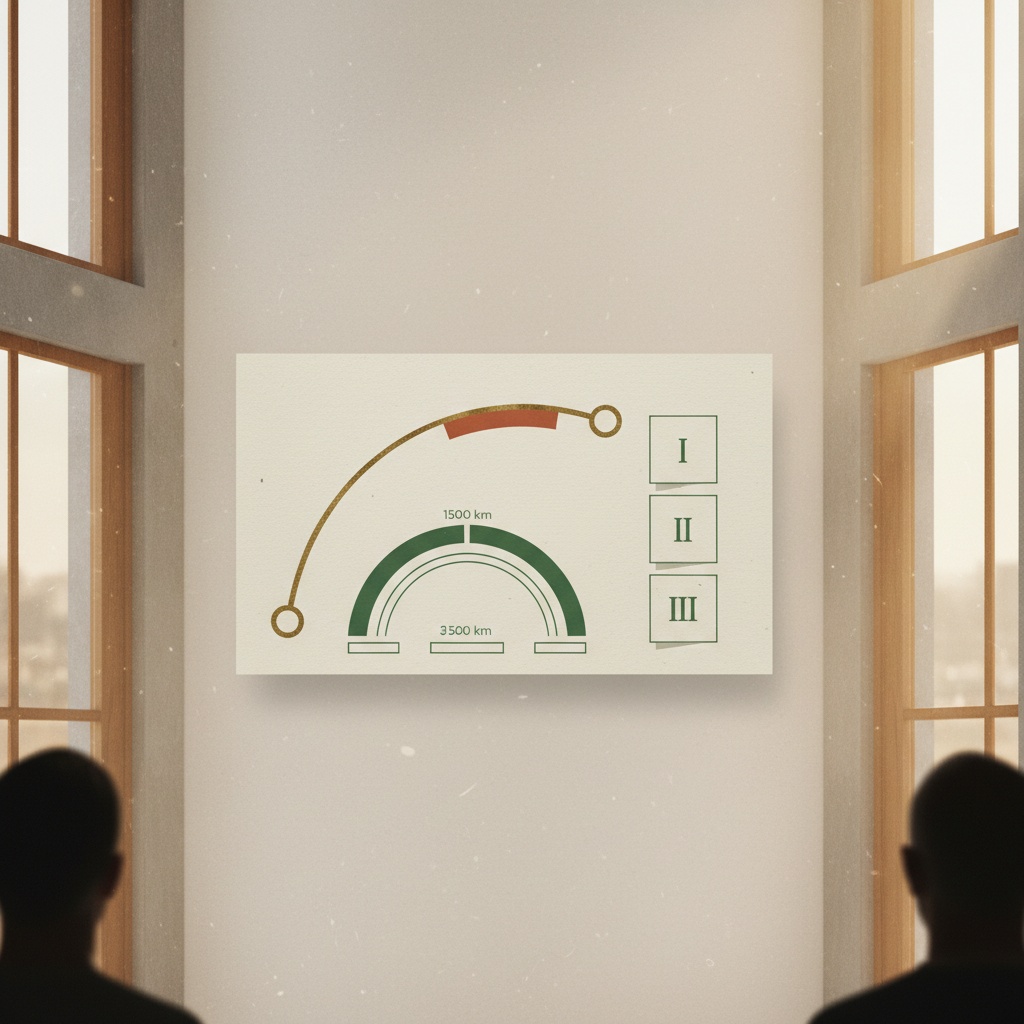
Care phases in by flight distance and by length of wait, on thresholds written into article 6 and cross-referenced to article 9. The phrase reasonable proportion does the work: two hours at Cluj-Napoca means a sandwich and water, while a night flight to Madrid landing you in a hotel at 02:00 means a proper meal, a bed and a taxi:
| You are entitled to | When it applies |
|---|---|
| Meals and refreshments in reasonable proportion to the wait | From 2 hours on flights up to 1500 km; from 3 hours on intra-EU flights over 1500 km and other flights 1500–3500 km; from 4 hours on all longer flights |
| Two phone calls or messages (telex, fax or email) | The same thresholds as meals |
| A hotel room | When the re-routed or rescheduled departure makes an overnight stay necessary |
| Transport between the airport and the hotel | In connection with an overnight hotel stay |
The wording “reasonable proportion” matters. A two-hour wait at Cluj-Napoca airport means a sandwich and a bottle of water; a delayed night flight from Bucharest to Madrid that drops you into a hotel at 02:00 means a proper meal, a real bed, and a taxi voucher in the morning. The airline cannot hand you a 5-euro voucher and call it dinner if you have been on a concourse for nine hours.
The right to care also applies to cancellations in the same way — Article 9 is invoked by both Article 5 (cancellations) and Article 6 (long delays). The same care kicks in if your flight is cancelled and you are re-routed onto a service the next morning. For the wider picture on what counts as a compensable cancellation, see flight cancellation compensation under EU 261.
When you are stranded at the airport — a step-by-step checklist
The most common situation in passenger forums is the traveller stuck at a terminal with no explanation of what was happening. Here is the order of operations Romanian passengers should follow.
- Find the airline staff. Go to the carrier’s desk or to the gate and explicitly ask for the meal vouchers and the hotel booking you are entitled to under Article 9 of EU 261/2004. Airlines do not always hand out care on their own initiative — many will hope you do not ask. Ask in plain words.
- Get a written statement of the cause. Ask for an email, a text, or a printed slip stating the reason for the delay. It has no bearing on the right to care itself, but you will need it if you also intend to claim compensation later. If the airline blames “weather,” “ATC” or “technical issue,” write down exactly what they said and when.
- If you get no help — buy what is necessary against a receipt. If the carrier offers nothing, you may buy what is reasonably needed: food and drink, a hotel room if the wait runs overnight, the transport between airport and hotel. Save every receipt — paper or PDF.
- Keep your spending moderate. The standard is reasonable and necessary, not a luxury dinner. A three-star hotel near the airport, an ordinary restaurant meal, a normal taxi fare. Proportionate spending gets reimbursed without argument.
- Document the disruption. Photograph the departure board with timestamp visible, save the boarding pass, screenshot every text message and email from the airline, note who you spoke with at the desk. That is your evidence file when you write to the airline — or to ANPC.
The same approach applies whether you are stuck at Otopeni in Bucharest, at Cluj International, at Avram Iancu Timișoara, or at a connection airport abroad. The regulation is identical across all EU airports and applies to non-EU carriers departing the EU too.
How to recover what you spent

If you bought food, a hotel room or transport because the airline did not help, you reclaim the money afterwards. Send a written claim to the airline — email is fine, registered post is stronger — and:
- Reference Article 9 of Regulation (EC) 261/2004 explicitly.
- Briefly describe what happened: flight number, scheduled and actual departure times, the airline staff response (or absence of one).
- List the expenses and attach the receipts.
- Give a deadline for response — 14 to 30 days is reasonable.
- Provide your IBAN for the refund.
If the airline ignores you, denies the claim, or drags its feet for months, the escalation path in Romania is structured. The first step is ANPC (Autoritatea Națională pentru Protecția Consumatorilor), the National Authority for Consumer Protection, which accepts complaints in writing through the consumer reclamation portal and can apply administrative pressure on the carrier. ANPC is also Romania’s national enforcement body for Regulation 261/2004, designated by Government Decision (HG) no. 1912/2006.
If the ANPC complaint does not produce a settlement, the binding route is the Judecătoria — the local first-instance court — where the claim is filed under simplified small-claims procedure. The applicable limitation period is the general Romanian three-year prescription under Article 2517 of the Civil Code. The CJEU confirmed in Cuadrench Moré (C-139/11, 2013) that national limitation rules govern EU 261 claims; for Romania that means three years from the date of the flight. After three years the claim is time-barred and even a perfectly valid case is lost.
If you also have a Sturgeon-type compensation claim on top of the care reimbursement, both go in the same letter. Read more in our guide to filing a flight compensation claim yourself.
And remember the structural point: the reimbursement of out-of-pocket expenses under Article 9 is not the same as the flat 250–600 euro compensation. The two claims live side by side. If the delay was not an extraordinary circumstance, you can recover both — your expenses and the flat amount.
A note on extraordinary circumstances and the care obligation
Romanian travellers regularly hit a wall when the airline replies with “force majeure” or “extraordinary circumstance” and treats the matter as closed. That is half-right and half-wrong. The wider doctrine of extraordinary circumstances was clarified by the Court in Sturgeon (joined cases C-402/07 and C-432/07, 2009) and in the Wallentin-Hermann ruling already cited above. These judgments mean the bar for the airline to escape Article 7 compensation is real but high: most technical defects do not qualify, ordinary crew rosters do not qualify, internal strikes typically do not qualify.
But even if the airline does establish a genuine extraordinary circumstance — a strike by ATC, a security incident, a volcanic ash cloud — that defence kills the compensation claim. It does not touch the right to care. McDonagh is the explicit authority on this point. So if you walk away from a five-hour delay at Bucharest with a “tough luck, it was extraordinary” message and no hotel booking, the airline has misstated the law. The right to care survives the defence.
If you are unsure whether your particular disruption was extraordinary in the legal sense, our piece on Romanian passenger rights under EU 261 walks through the typical cases.
Check whether your delayed flight from Romania qualifies — free assessment from AirHelp
What the right to care does not cover
Three things sit outside article 9: replacement travel you booked yourself without the airline’s agreement, which is an article 8 question; consequential losses such as lost wages or a ruined holiday, which run through the Montreal Convention or national contract law; and comfort upgrades. The standard is sober — three-star hotel, ordinary restaurant, normal taxi:
- Replacement travel costs beyond the re-routing offered by the airline. If you book your own alternative flight without the airline’s agreement, the recovery of that ticket cost is a separate matter (Article 8, not Article 9).
- Lost wages, missed meetings, ruined holidays. Consequential losses generally fall outside Regulation 261 and would have to be pursued under the Montreal Convention or national contract law, with much higher evidentiary burdens.
- Comfort upgrades. A business-class lounge, a 5-star hotel, a fine-dining bill — these are not reasonable and the airline can decline to refund the excess.
The standard is sober and proportionate. Three-star hotel, ordinary restaurant, normal taxi. A reasonable judge at the Judecătoria will reimburse that without argument. They will cut a thousand-euro suite bill down to the cost of an airport hotel.
This is not legal advice
This guide is based on the published text of Regulation (EC) 261/2004, CJEU rulings on the allow-list, and ANPC guidance for Romanian consumers. For advice on your individual file, contact ANPC, the national enforcement body designated for EU 261 in Romania, through the official complaint portal. For binding adjudication, the Judecătoria in the place of departure, arrival, or the airline’s Romanian establishment is competent. If your case is complex, a Romanian lawyer specialising in aviation or consumer law is the next step.
Sources and further reading
- EUR-Lex — Regulation (EC) No 261/2004, with particular reference to Articles 5, 6, 7, 8 and 9
- CJEU McDonagh (C-12/11, 2013) — care obligation is unconditional, even during extraordinary circumstances of unprecedented scale
- CJEU Wallentin-Hermann (C-549/07, 2008) — bar for extraordinary circumstances on technical defects
- CJEU Sturgeon (joined cases C-402/07 and C-432/07, 2009) — long delays compensated as cancellations
- CJEU Cuadrench Moré (C-139/11, 2013) — national limitation periods govern EU 261 claims
- ANPC — Romanian National Authority for Consumer Protection: consumer complaint portal
- Romanian-language version of this guide: dreptul la îngrijire în întârzieri de zbor
Last reviewed: 2 June 2026.


No comments yet