
If your flight from a Romanian airport was delayed, cancelled or overbooked, the first question is the practical one: are you actually eligible for EU 261 compensation? The headline figure of 250, 400 or 600 euro is correct, but it is paid only when four separate conditions stack up cleanly. Many Romanian passengers either skip a claim that would have paid out or chase one that was never on the table — both because the rules are narrower than the marketing suggests and broader than the airline rejection letter implies. This page walks through the four-step test, the institutions in Romania that enforce it (ANPC and the Judecătoria), and the deadlines that decide whether your right is still alive. CompensaRezbor explains, step by step, what to do in this situation.
For the parallel guide on what to do once you know you qualify, see cancelled flight compensation in Romania and the step-by-step claim process under the 2026 reform.
The four-step eligibility test, in plain language
A four-step test decides eligibility for a Romanian passenger, and all four must hold at once. The first is scope: the flight departed from an EU, EEA or Swiss airport. The remaining three cover the event, the length of the delay and the cause:
EU 261/2004 covers a Romanian passenger when every one of these is true:
- The flight is in scope. It departed from an EU, EEA or Swiss airport — including Bucharest Otopeni, Cluj-Napoca, Timișoara, Iași, Sibiu, Bacău or Craiova — or it arrived in the EU on an EU-licensed airline. A flight from Istanbul to Bucharest on Turkish Airlines is not covered. The same flight on Tarom or Wizz Air is.
- A protected event happened. A delay of three hours or more at the final destination; a cancellation announced less than 14 days before departure; or a denied boarding against your will (overbooking, downgrade, late check-in caused by the carrier).
- The cause was within the airline’s control. Crew shortage, internal scheduling errors, ordinary technical defects, route changes for commercial reasons — all chargeable. Severe weather, ATC closures, security incidents and political unrest are usually extraordinary and break the chain. The airline must prove the extraordinariness, not assert it.
- You are within the three-year prescription period under article 2517 of the Romanian Civil Code. After 36 months from the disruption date, a Judecătoria will reject the case as time-barred.
If even one of those four is missing, the fixed payout falls away. If all four are present, you have a claim that an ANPC complaint or a small-claims action at the local Judecătoria will treat as a regular consumer dispute — not a discretionary favour.
Step one — is your flight in scope of EU 261?
Article 3 defines the geographic and operational reach. Any flight departing from a Romanian airport is covered whatever the carrier, while an arrival into Romania is covered only when the operator holds an EU licence — the asymmetry that decides most borderline cases:
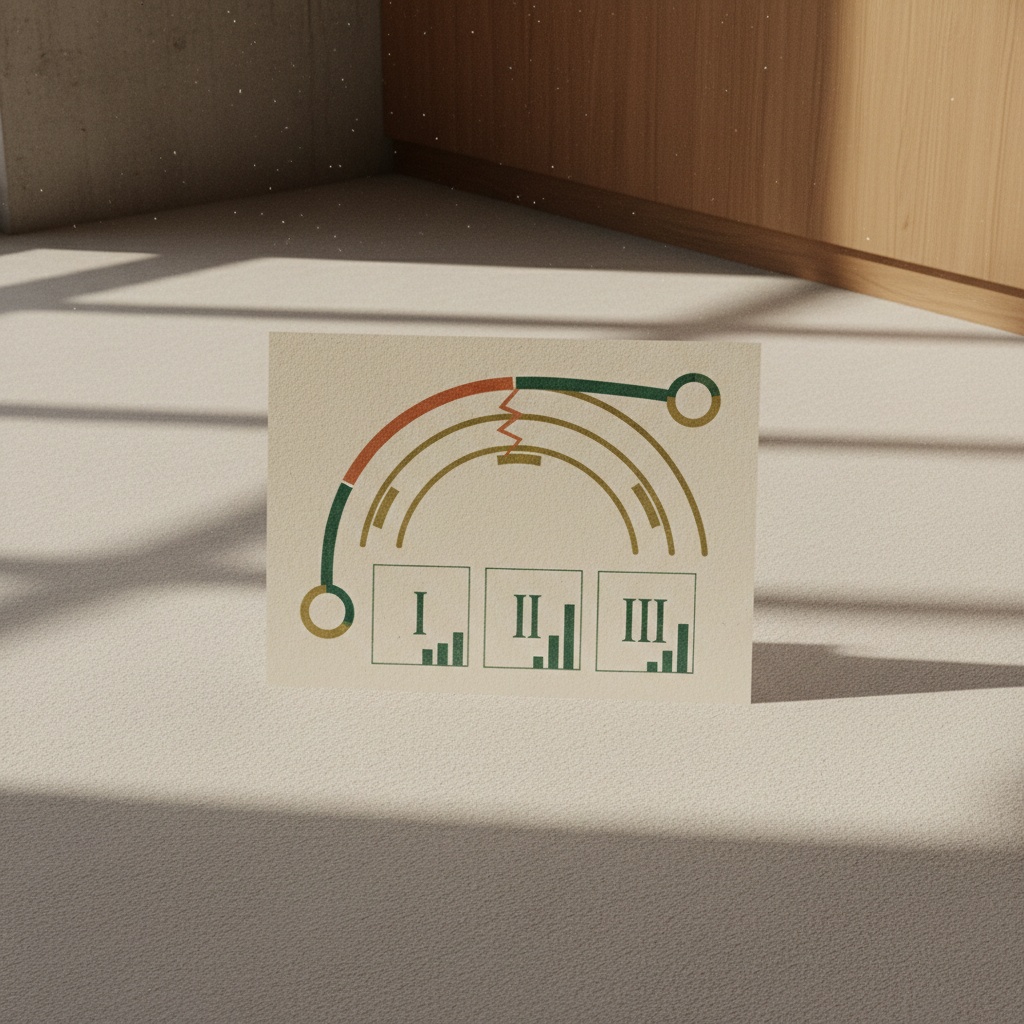
Article 3 of Regulation (EC) No 261/2004 defines the geographic and operational reach.
- Any flight departing from a Romanian airport is covered, whatever the airline. Wizz Air from Cluj to Dortmund, Ryanair from Bucharest to Madrid, Turkish Airlines from Otopeni to Istanbul, Qatar Airways from Bucharest to Doha — every one of them is covered for the outbound leg.
- Inbound flights into a Romanian airport are covered only if the carrier is licensed in the EU. Tarom, Wizz Air, Ryanair, Lufthansa, KLM, Air France, ITA Airways and similar are in scope. A Pegasus return from Antalya, an Emirates from Dubai or a Delta from New York — those inbound legs are out of scope, even though the passenger landed in Bucharest.
- Connecting itineraries booked on a single ticket are read as one transport unit. The CJEU set this rule in Wegener (C-537/17, 2018). A passenger flying Bucharest → Frankfurt → Toronto on one reservation has a single covered journey, even if the long-haul leg sits outside EU airspace.
A common confusion: a flight booked as two separate tickets (one Bucharest → Vienna, a separate Vienna → Bangkok) is not connected for EU 261 purposes. Missing the second flight because the first was late will not trigger the fixed payout unless each leg independently met the three-hour rule.
Step two — did a protected event actually happen?
EU 261 triggers on three event types only, and outside them no fixed payout is due. The benchmark for the delay case is Sturgeon, which assimilated a long delay to a cancellation. The other two events are the cancellation itself and denied boarding:
EU 261 only triggers on three event types. Outside them, no fixed payout is due.
Delay at final destination of three hours or more
The benchmark is Sturgeon (joined cases C-402/07 and C-432/07, 2009). A delayed passenger who arrives three or more hours late is treated, for compensation purposes, as if the flight had been cancelled. The clock runs to the moment the aircraft door opens at the gate, not to landing. A 2-hour 50-minute delay is not enough; a 3-hour 5-minute delay puts the airline on the hook.
For connecting itineraries, the rule from Folkerts (C-11/11, 2013) is what counts: the relevant arrival time is at the final destination, not at the intermediate hub.
Cancellation with less than 14 days' notice
A cancellation announced 14 days or more before departure cuts off the fixed compensation entirely — though the right to a refund or re-routing survives. Inside the 14-day window the airline owes compensation unless it offers a re-routing that lands you close to the original schedule, on a sliding scale set in article 5(1)(c).
Denied boarding against your will
Usually overbooking, sometimes a downgrade or late check-in caused by the carrier. If you presented at the gate on time and the airline refused to let you board, the fixed payout is triggered without any delay threshold. A volunteer who gave up the seat for compensation is not in scope.
Step three — was the cause within the airline’s control?

This is where most rejection letters live. Article 5(3) lets the carrier escape the fixed payment if it proves the disruption was caused by extraordinary circumstances that could not have been avoided with all reasonable measures.
The CJEU has narrowed that defence sharply over fifteen years:
- Wallentin-Hermann (C-549/07, 2008) — ordinary technical defects discovered during routine maintenance are not extraordinary. The airline bears the burden of proof, and it must show both extraordinariness and unavoidability.
- Krüsemann (C-195/17, 2018) — a wildcat strike by the carrier’s own crew is not extraordinary, because labour relations are part of the carrier’s normal commercial activity.
- Pesková (C-315/15, 2017) — a bird strike can be extraordinary, but the airline still has to prove what reasonable measures it took to limit the resulting delay.
- McDonagh (C-12/11, 2013) — even when the disruption is genuinely extraordinary (the Eyjafjallajökull eruption), the duty of care (meals, drinks, hotel) does not switch off.
A rejection email that reads only “operational reasons” or “weather conditions” without naming the event, the time window and the measures the carrier took is not proof. ANPC and Romanian small-claims judges treat unspecified rejections as inadequate. For deeper coverage of the defence, read our walk-through of extraordinary circumstances under EU 261 and the specific technical-fault compensation guide.
Step four — are you still inside the three-year deadline?
EU 261 itself does not set a prescription period — the CJEU in Cuadrench Moré (C-139/11, 2013) held that national civil law decides. In Romania, article 2517 of the Civil Code gives a passenger three years from the date of the disruption to start a claim.
Practically that means a flight cancelled on 15 June 2023 is claimable until 15 June 2026. After that date a Judecătoria will reject the file as prescribed, even if every other condition is satisfied. The three-year clock does not pause while you negotiate with the airline. A common trap: 18 months of email ping-pong followed by 6 months of silence eats two thirds of the period before a passenger even thinks about court.
How much you are eligible for, by distance
Once the four-step test passes, the amount is fixed by the great-circle distance between the first departure and the final destination — not by the leg that failed and not by the ticket price. The airline has no discretion over which tier applies:
Once the four-step test passes, the amount is fixed by the great-circle distance between the first departure and the final destination.
| Distance band | Compensation | Typical Romanian example |
|---|---|---|
| ≤ 1,500 km | 250 euro | Bucharest → Vienna, Cluj → Frankfurt, Iași → Munich, Timișoara → Athens |
| Intra-EU > 1,500 km, or other routes 1,500–3,500 km | 400 euro | Bucharest → Madrid, Cluj → Lisbon, Bucharest → Tel Aviv, Bucharest → Doha |
| Non-EU > 3,500 km | 600 euro | Cluj → Dubai, Bucharest → New York on EU carrier |
The airline may halve the third-band figure to 300 euro if it offers re-routing that lands the passenger no more than four hours late — but the half-fare clause has no effect when the delay at arrival actually exceeded four hours.
Where to enforce the claim in Romania
Two Romanian institutions matter once the claim is on paper. ANPC, Romania’s national enforcement body for Regulation 261/2004, designated by Government Decision (HG) no. 1912/2006, handles the complaint stage, and the Judecătoria is where a claim becomes enforceable. They are complements, not alternatives:
Two Romanian institutions matter once the claim is on paper.
- ANPC (Autoritatea Națională pentru Protecția Consumatorilor) handles the consumer-law side of the file. ANPC mediates, applies fines for unfair commercial practices and pushes airlines that ignore the regulation. The fastest channel is the online portal anpc.ro/ce-trebuie-sa-stim/sal/.
- Judecătoria — the local first-instance court — handles the small-claims action when the airline still refuses. Under Rehder (C-204/08, 2009) a passenger may sue at the court of either the departure or the arrival airport, which gives a Romanian passenger venue flexibility for flights between two Romanian airports or between Romania and another EU member state.
When a service is worth using, when self-claiming is fine
If the file is clean — clear three-hour delay, no extraordinary circumstance, fresh date, no operating-carrier confusion — a Romanian passenger can usually self-claim in two letters and an ANPC escalation. If the airline is fighting hard, the carrier is foreign, the case turns on burden-of-proof issues from Wallentin-Hermann or Krüsemann, or the file is older than 12 months, a no-win-no-fee service that takes the airline to court is usually the more efficient route. The fee is typically 25–35 % of recovered compensation, paid only on success.
Check eligibility with AirHelp — free, no-win-no-fee
For a side-by-side breakdown of the two paths, see claim yourself or use a service.
Common reasons eligibility fails — and how to avoid them
Eligibility usually fails for predictable reasons. The two most common: the carrier was non-EU and the flight was inbound to Romania, while outbound legs from Romania stay covered; and the fourteen-day notice was respected, which removes the fixed compensation entirely:
- The carrier was non-EU and you were flying into Romania. Outbound legs from Romania are still covered.
- The 14-day notice was respected. A cancellation announced more than two weeks ahead kills the fixed payout but never the refund right.
- Two separate tickets, not one reservation. The CJEU’s single-transport-unit reasoning in Wegener does not apply.
- Delay at the connecting hub, not at final destination. Only the arrival time matters under Folkerts.
- You missed the three-year deadline. Cuadrench Moré controls — there is no extension for “we were in talks”.
- You signed a settlement at the airport. A waiver presented as a goodwill voucher may be enforced against you. Never sign before you have read the language carefully.
Final eligibility checklist
The checklist runs the whole test in sequence before you file: departure from an EU, EEA or Swiss airport, or arrival into the EU on an EU-licensed carrier; a delay of three hours or more at the final destination; and the remaining boxes below:
Run this sequence before filing.
- [ ] Departure from an EU/EEA/Swiss airport, or arrival into the EU on an EU-licensed carrier.
- [ ] Delay ≥ 3 hours at final destination, or cancellation with < 14 days notice, or denied boarding against your will.
- [ ] Cause within the airline’s control (no proven extraordinary circumstance under article 5(3)).
- [ ] Less than three years since the flight date.
- [ ] You hold the booking confirmation, boarding pass (if issued) and any airline communications about the disruption.
If all five boxes are ticked, you are eligible. The next step is filing the claim with the operating carrier and, if needed, escalating to ANPC or the Judecătoria within the three-year window.


No comments yet